
Turning Geospatial Data into Actionable Insights on Video Walls and Dashboards
Geospatial data has become one of the most powerful assets for modern organisations. Whether monitoring logistics routes, managing critical infrastructure, or visualising city wide sensor data, location based information reveals patterns and connections that traditional dashboards can’t capture.
But as the volume and complexity of geospatial data grow, so does the challenge of presenting it clearly and collaboratively. That’s where map visualization software and video wall displays come together transforming complex geodata into actionable insights visible across teams and operations centers.
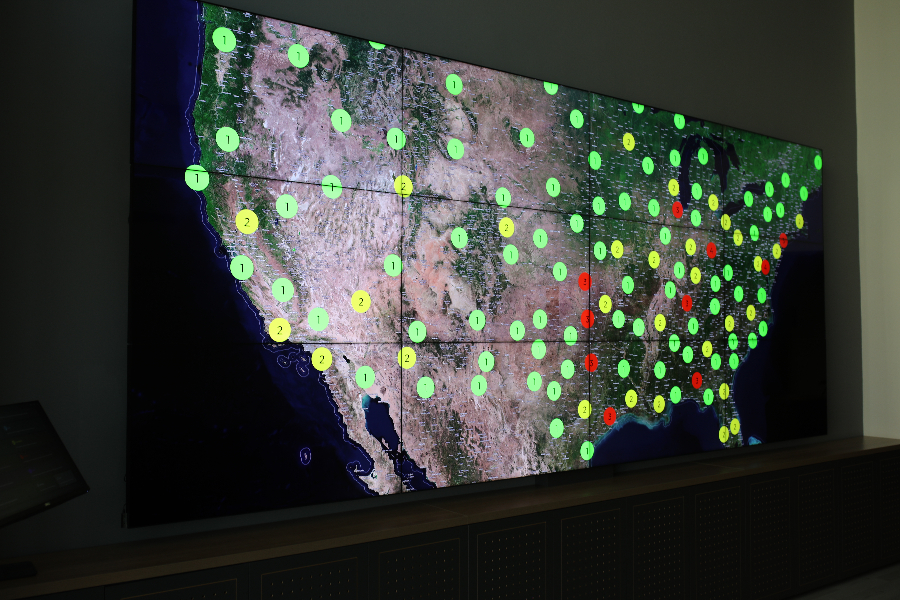
Why Visualising Geospatial Data Matters
Geospatial data shows not only what is happening, but where. When displayed effectively, it empowers faster decisions and stronger coordination especially in environments like control rooms, emergency centers, or command operations.
Traditional dashboards limit users to single screens or static views. By contrast, a geospatial visualization system allows multiple maps, data layers, and analytics panels to coexist on a large shared display, creating a real-time spatial overview for everyone involved.
From Dashboards to Walls: Expanding the Visual Canvas
A standard web based dashboard might show one or two map panels at a time. On a video wall, those same panels can be expanded into a multi-layered map visualization environment integrating real-time tracking, heatmaps, and sensor data from various sources.
For example:
- Logistics companies can track hundreds of moving assets across regions simultaneously.
- Smart city operations can monitor live traffic, weather, and energy consumption data on a unified screen.
- Emergency response teams can visualise incidents, dispatch units, and environmental conditions in real time.
This immersive format gives teams a broader situational awareness, enabling faster response and collaboration.
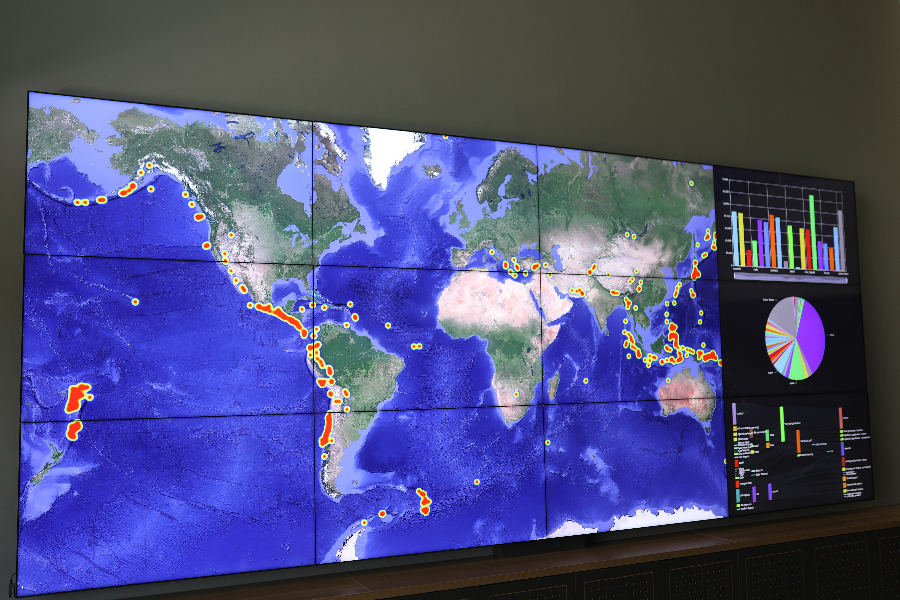
The Role of Software-Based Systems
In the past, achieving these kinds of visualizations required expensive, hardware based video wall controllers. Today, software based video wall solutions eliminate that barrier.
Platforms like Lygos allow organisations to create interactive map dashboards and display them across any number of computers and screens forming one seamless visual workspace without specialised equipment.
Users can:
- Deploy live GIS maps and dashboards directly from their desktops or browsers.
- Combine real-time data feeds with charts, reports, and multimedia.
- Control layouts and content collaboratively through connected clients or tablets.
This flexibility makes real-time map monitoring software accessible not only to large control centers, but also to smaller teams seeking scalable visualization tools.
Collaborative Analysis and Decision-Making
The power of video wall map visualisation goes beyond aesthetics it transforms teamwork. When everyone in a room sees the same live geospatial data, decisions become faster, clearer, and more aligned.
For instance:
- Utility companies can coordinate maintenance by visualising outage zones on shared maps.
- Transportation teams can reroute vehicles collaboratively using real-time data.
- Security centers can overlay threat information on geographic layers for immediate response.
Collaboration is no longer limited to analysts sitting at separate screens; instead, data becomes a shared experience driving collective intelligence.
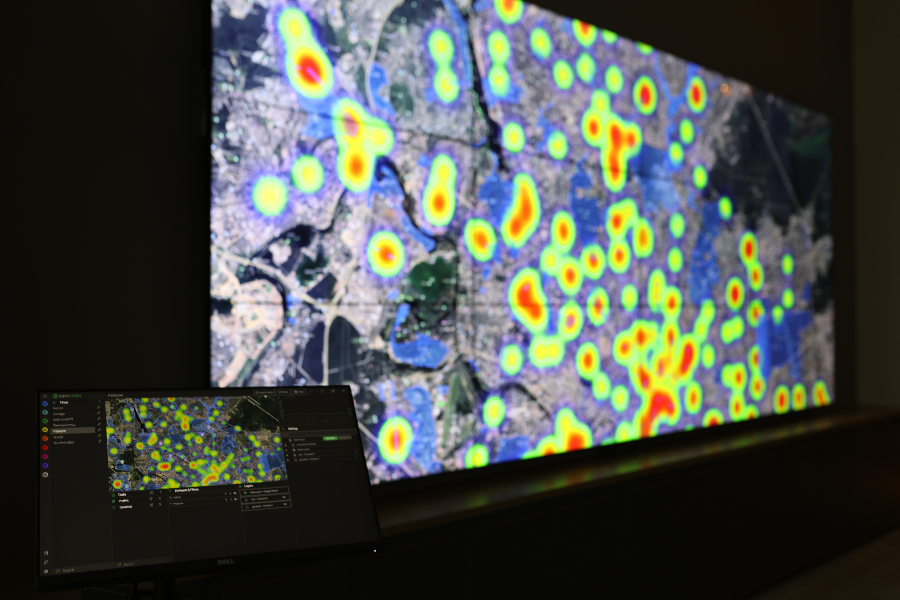
Designing Effective Geospatial Video Wall Dashboards
To turn geospatial data into truly actionable insight, consider the following best practices:
- Simplify visual layers: Avoid overcrowding with too many data points or overlapping colors.
- Use clear symbology and legends: Consistent visuals help teams interpret data quickly.
- Integrate live data feeds: Connect APIs, IoT devices, or tracking systems for real-time updates.
- Design for scalability: Ensure your visualization layout adapts to different screen sizes or configurations.
- Enable remote control: Empower users to manage and update visual content from any workstation.
Conclusion
In a world where every second counts, geospatial visualization systems are redefining how organizations see and act on their data. By combining GIS map visualizations with software based video wall technology, teams gain the power to monitor, analyze, and collaborate in real time all within one unified visual space.
With platforms like Lygos, transforming geospatial data into actionable insights has never been easier. Whether it’s a control room, operation center, or analytics dashboard, map-driven visualization brings clarity where it matters most because seeing the full picture is the first step toward smarter decisions.